Quick answer
Run a 6-6 with beginners, a 4-2 with youth teams that have two setters, a 6-2 when you have two good setters and four or more hitters, and a 5-1 when you have one setter you trust in every rotation. The first number counts the hitters and the second counts the setters.
Volleyball offensive systems at a glance
Every system answers two questions: who sets in each rotation, and how many hitters are in the front row. The rotation rules are the same in all of them.
| System | Setters | Who sets | Front-row attackers | Best for |
|---|---|---|---|---|
| 5-1 | 1 | The same setter, from both rows | 3 (setter back row) or 2 | High school, club, college |
| 6-2 | 2 | The back-row setter | Always 3 | Two good setters, 4+ hitters |
| 4-2 | 2 | The front-row setter | Always 2 | 10U-14U, rec |
| 6-6 | Everyone | Whoever is in the setting spot | 2 | Beginners |
| 6-3 | 3 | The front-row setter on the right | 2 | Rare; youth teams training setters |
| 6-1 | 1 main | Main setter from the back row; another player when she is front row | Usually 3 | Rare |
| 5-2 | 2 | Split unevenly between two setters | Varies | Rare |
The rare systems are named differently by different coaches, so check what your club means before you copy a plan.
Which system should your team run?
The quick picker above asks about level, setters and hitters. Here is the same thinking by age and level:
- 8U to 10U and first-year players: 6-6. One formation, everyone sets.
- 11U to 12U: 6-6, or a 4-2 when two players can set.
- 13U to 14U and middle school: 4-2, moving to a 6-2 as passing improves.
- High school JV: 6-2 or 5-1, depending on your setters.
- High school varsity, 15U+ club, college: 5-1 with one strong setter, or 6-2 with two equal setters and deep hitting.
Two more things to weigh:
- Passing. Systems with a back-row setter (5-1, 6-2) need passes that reach the target, because the setter is running in.
- Substitutions. A 6-2 that subs the front-row setter uses about four subs per trip through the rotations. Check your sub limit first.
Pros and cons of each system
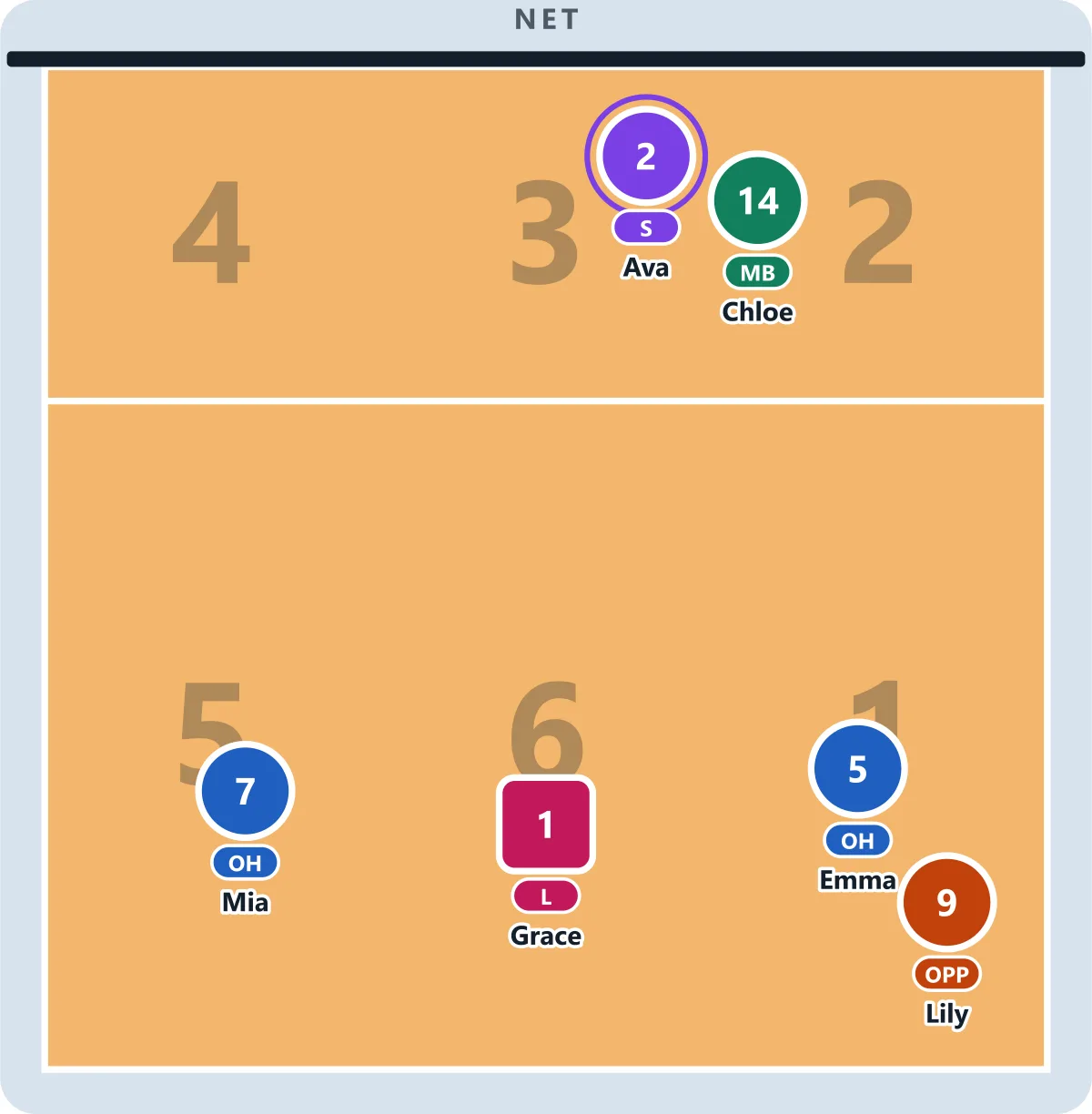
5-1. One setter gives hitters the same tempo, the same location and the same voice all match. Your best setter touches every second ball. The cost: two front-row attackers in three rotations, and a long run for the setter from zone 1. You also need a plan if your only setter gets hurt.
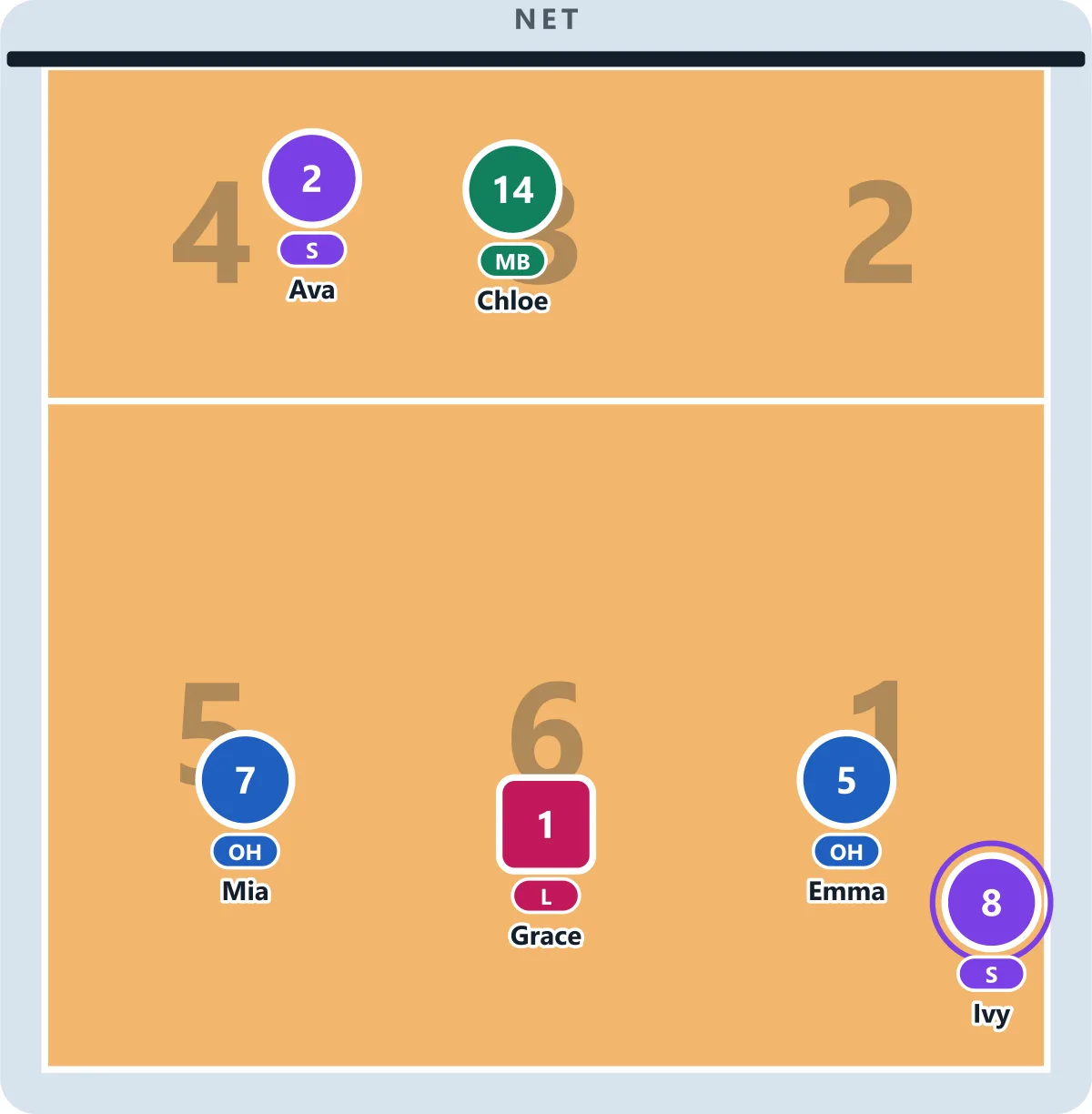
6-2. Three hitters in front all the time and two setters sharing the load. The cost: hitters time two setters, and subbing the front-row setter uses about four subs per trip. If one setter is clearly better, you lose that edge for three rotations.
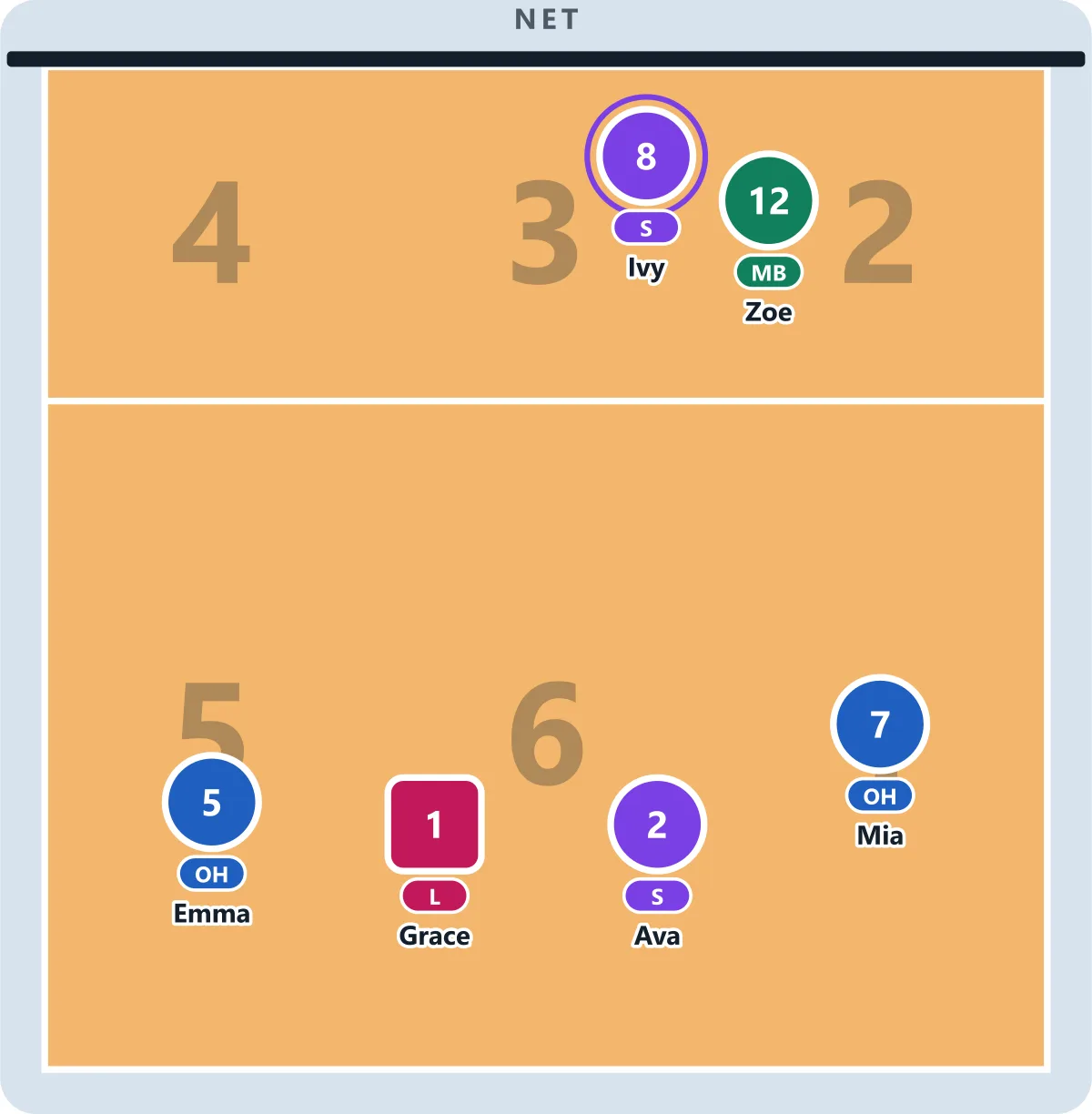
4-2. Short, easy sets from the net and simple rules for young players. The cost: only two attackers, and blockers learn quickly that the set goes outside. It is a learning system, not a ceiling.
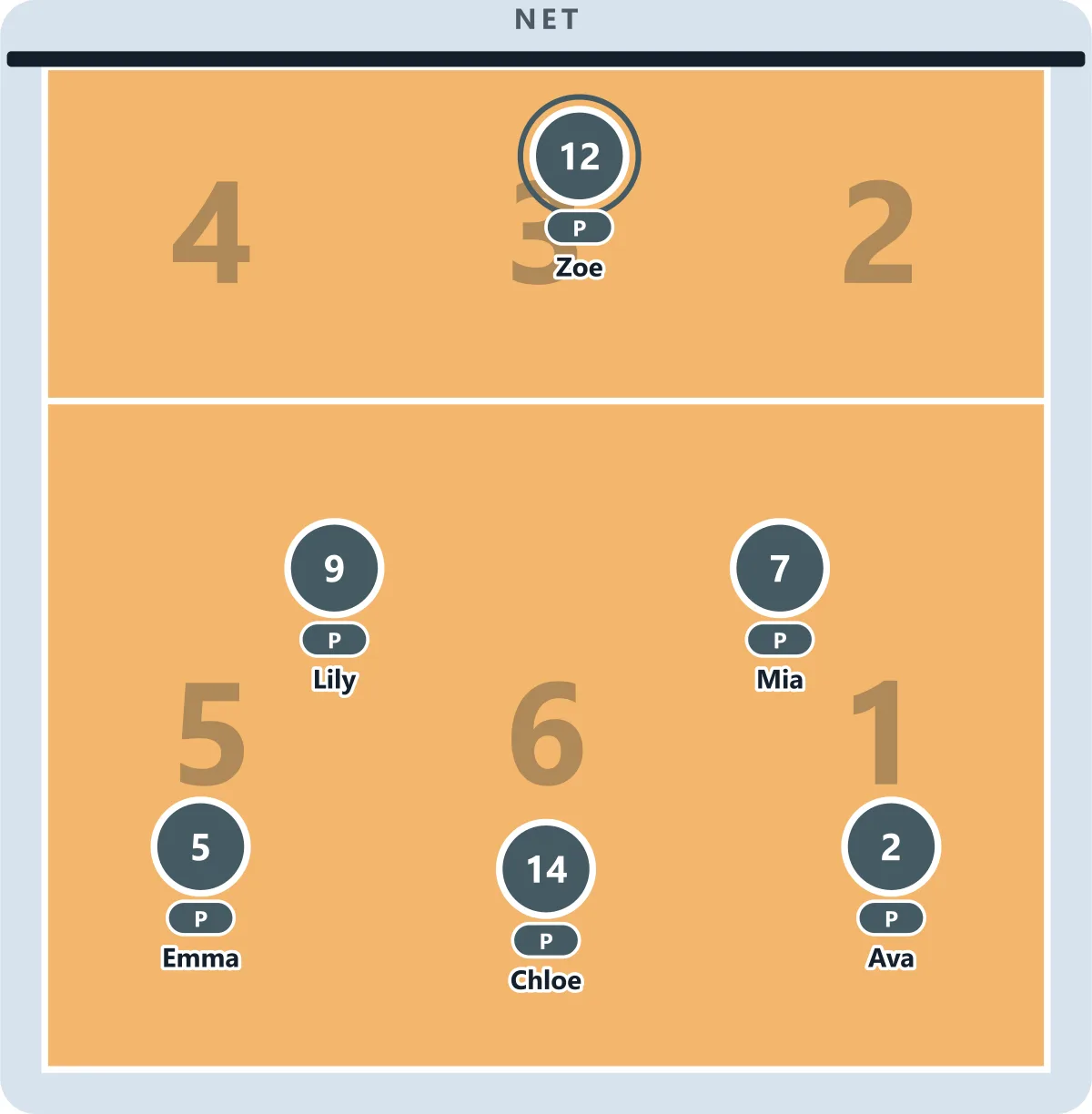
6-6. Every player learns every skill and nobody is labeled too early. The cost: setting quality changes every rotation, so rallies are less consistent. That is fine at the level where it is used.
How the system changes serve receive
In a 5-1 and 6-2 the back-row setter must “hide” near the net, so serve receive patterns change every rotation and must stay legal under the overlap rules. In a 4-2 and 6-6 the setter is already front row, so patterns repeat and are easier to teach: three patterns in a 4-2, one in a 6-6. Most teams pass with three players (5-1, 6-2), four (4-2) or five (6-6).
Same rotation, two systems
The difference shows up in Rotations 4 to 6. In a 5-1 the setter is front row and you have two attackers. In a 6-2 the second setter has reached the back row, so three hitters stay at the net.
And for younger teams, compare the two front-row setting systems:
6-1 volleyball rotation and 5-2: the rare hybrids
6-1. Usually one main setter who sets from the back row. When she rotates to the front row, a second player sets so the main setter can hit. In practice it behaves like a 6-2 where one setter is much stronger. Some coaches use “6-1” for a 5-1 where the setter is also a strong attacker.
5-2. Two setters, but not evenly split: often a 5-1 that brings a second setter in for a few rotations. Teams try it when the main setter is small and they want a taller blocker in the front row in her front-row rotations.
6-3. Three setters, every other spot in the lineup. The front-row setter on the right side sets. It spreads setting across many players, which is why some youth clubs like it.
You can build any of these in the generator with the Custom system: assign roles to each player and pick a setting rule (“the back-row setter sets”, “the front-row setter sets” or “whoever is in the setting zone sets”). Every formation is still checked for overlap.
When to change systems
Change systems in the off-season or early in the season, not in the middle of a tight match. Signs it is time to move up:
- Your passes reach the setting target most of the time.
- Two or more players set a hittable ball from different spots.
- Your hitters can approach from the outside and the right side.
Signs to step back: rallies break down on the second contact, or players are lost in the rotation. A simpler system with good habits beats a complex one with confusion. Try any change first in the volleyball rotation generator, then print the rotation sheet for practice.
Frequently asked questions
What are the different rotations in volleyball?
Coaches usually mean the offensive systems: 5-1 (one setter), 6-2 (two setters who set from the back row), 4-2 (two setters who set from the front row) and 6-6 (everyone sets from one spot). Rare versions are the 6-1, 5-2 and 6-3. In every system the team still rotates clockwise through the same six zones.
What is a 6-1 in volleyball?
A 6-1 usually means one main setter who sets from the back row, with another player setting when she is in the front row so she can hit. That gives three front-row attackers in most rotations. The name is used in different ways, so ask what your club or coach means before you plan around it.
What is a 5-2 in volleyball?
A 5-2 is a rare hybrid with two setters where the setting is split unevenly. Most often it is a 5-1 that brings in a second setter for some rotations, for example to keep three hitters in the front row. Because coaches use the name differently, treat it as a variation of the 5-1 or 6-2 rather than its own system.
How many types of rotation are there in volleyball?
There are four common systems (5-1, 6-2, 4-2 and 6-6) and a few rare hybrids (6-1, 5-2, 6-3). All of them use the same rotation rules: six zones, clockwise movement after each side-out, and the same overlap rule at the serve. The system only changes who sets and who hits.
Why is a rotation system used in volleyball?
The rules make every player rotate through every zone, so a coach needs a plan for who sets and who attacks in each of the six rotations. A system gives that plan. It puts the setter and hitters in the right spots, keeps the best passers in the back row, and keeps the lineup legal at the serve.
How do you run a 6-3 rotation in volleyball?
Place three setters every other spot in the lineup, so one or two are always in the front row. The front-row setter on the right side sets, and the others hit or pass. It is rare and mostly used by youth teams that want many players to learn to set. A 6-6 or 4-2 is simpler for most young teams.
Which volleyball system is best for 12U?
Most 12U teams play a 6-6 or a 4-2. Choose the 6-6 if most players are still learning to pass and set, so everyone gets setting reps. Choose the 4-2 when two players can set a hittable ball, because the setter stays at the net and only needs a short set. Some strong 12U club teams move to a 6-2.
Rules checked
Rule sets used on this page: NFHS (high school) 2026-27, USAV (club) 2025-27, NCAA (college) 2026 and FIVB (international) 2025-28. Where leagues differ, the tool makes it a setting. Always check your league or state association.
- Rotation direction / when: USAV 7.6.2
- Overlap: which pairs: USAV 7.4.2-7.4.3; NFHS 6-4-3
- Substitution limit per set: USAV 15.1, 15.6; NCAA 2026 (differs by league — check yours)
Last reviewed: by EmproIT. See how we check the rules.