Quick answer
Serve receive is how your team lines up to pass the other team's serve. Most 5-1 and 6-2 teams use 3 passers (the libero and both outsides), youth 4-2 teams use 4, and beginners use 5 in a W. Non-passers stand near the net, and the back-row setter hides close to the target while staying legal.
Volleyball serve receive: 3, 4 and 5 passer patterns
Every serve receive pattern answers the same questions: who passes, where the non-passers stand, and where the setter hides. All of them must be legal under the overlap rules at the moment of the serve.
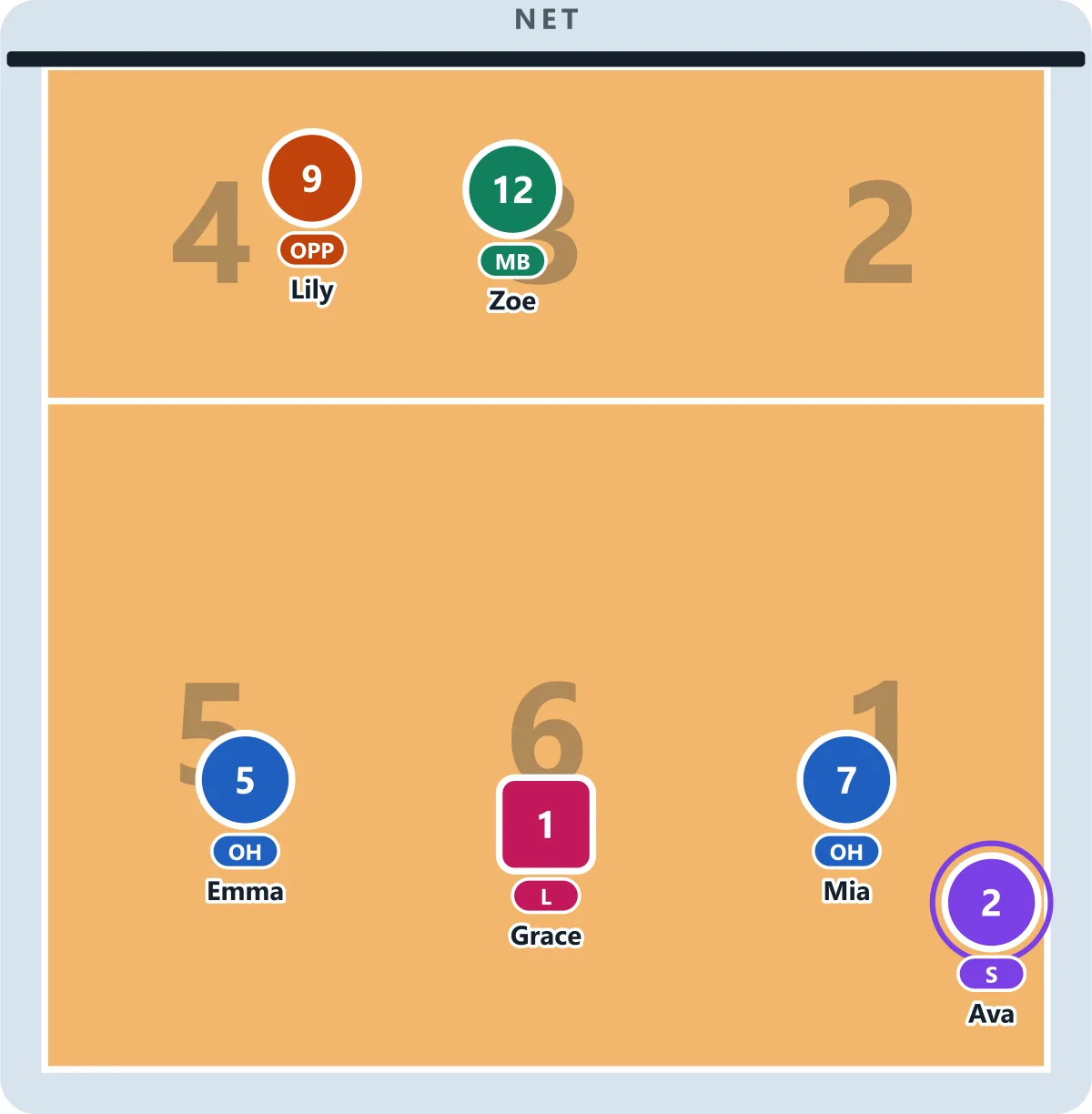
3 passers. The standard for the 5-1 and 6-2: the libero and both outside hitters pass in three lanes, about 6 to 7 m from the net. Everyone else stands near the net, close to the spot where they will attack.
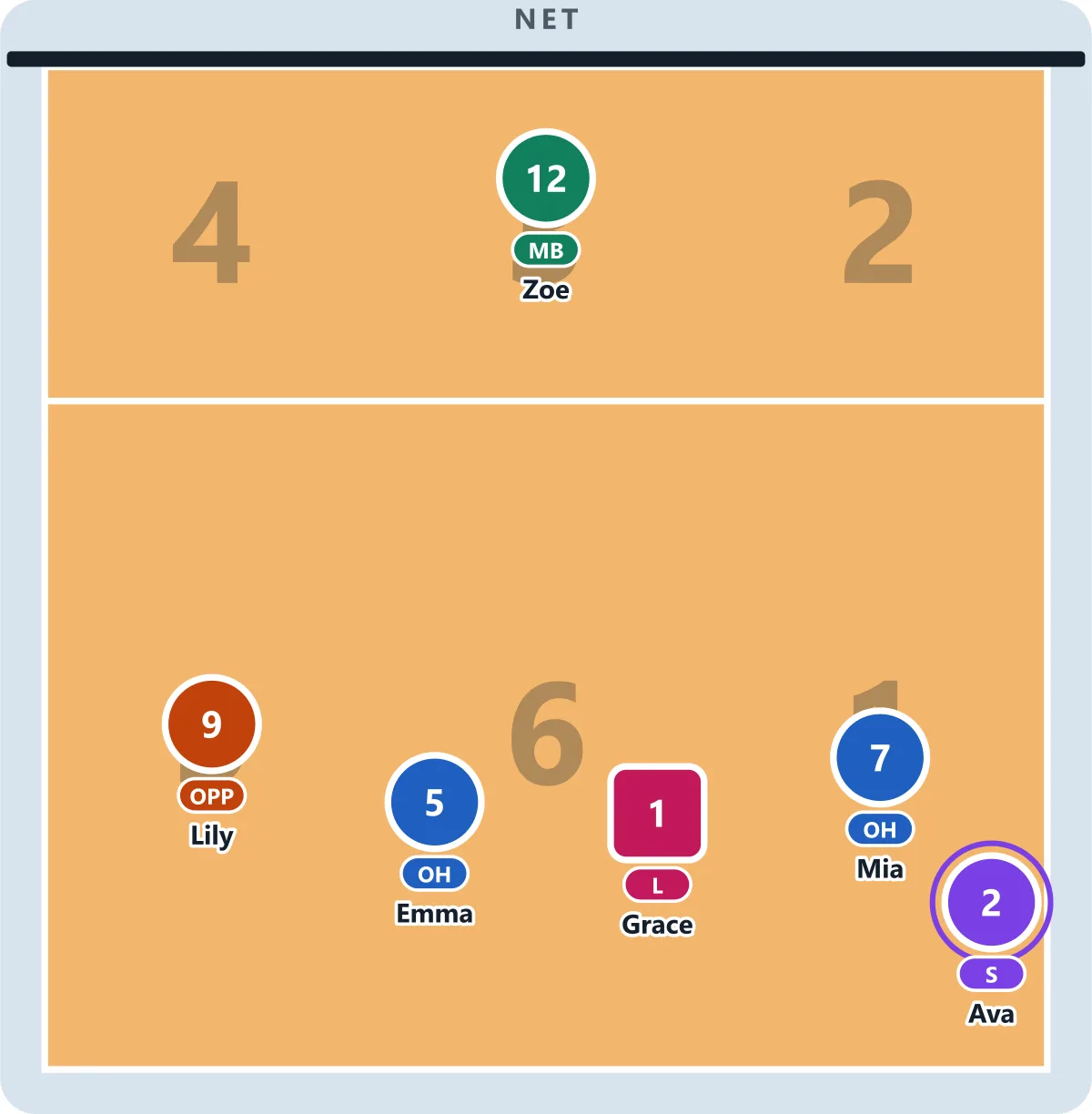
4 passers. Common in the 4-2 and with younger teams. In a 4-2 the three back-row players pass, plus one front-row hitter; in a 5-1 the back-row setter still hides, so two back-row and two front-row players pass. Lanes are narrower, so there are fewer seams.
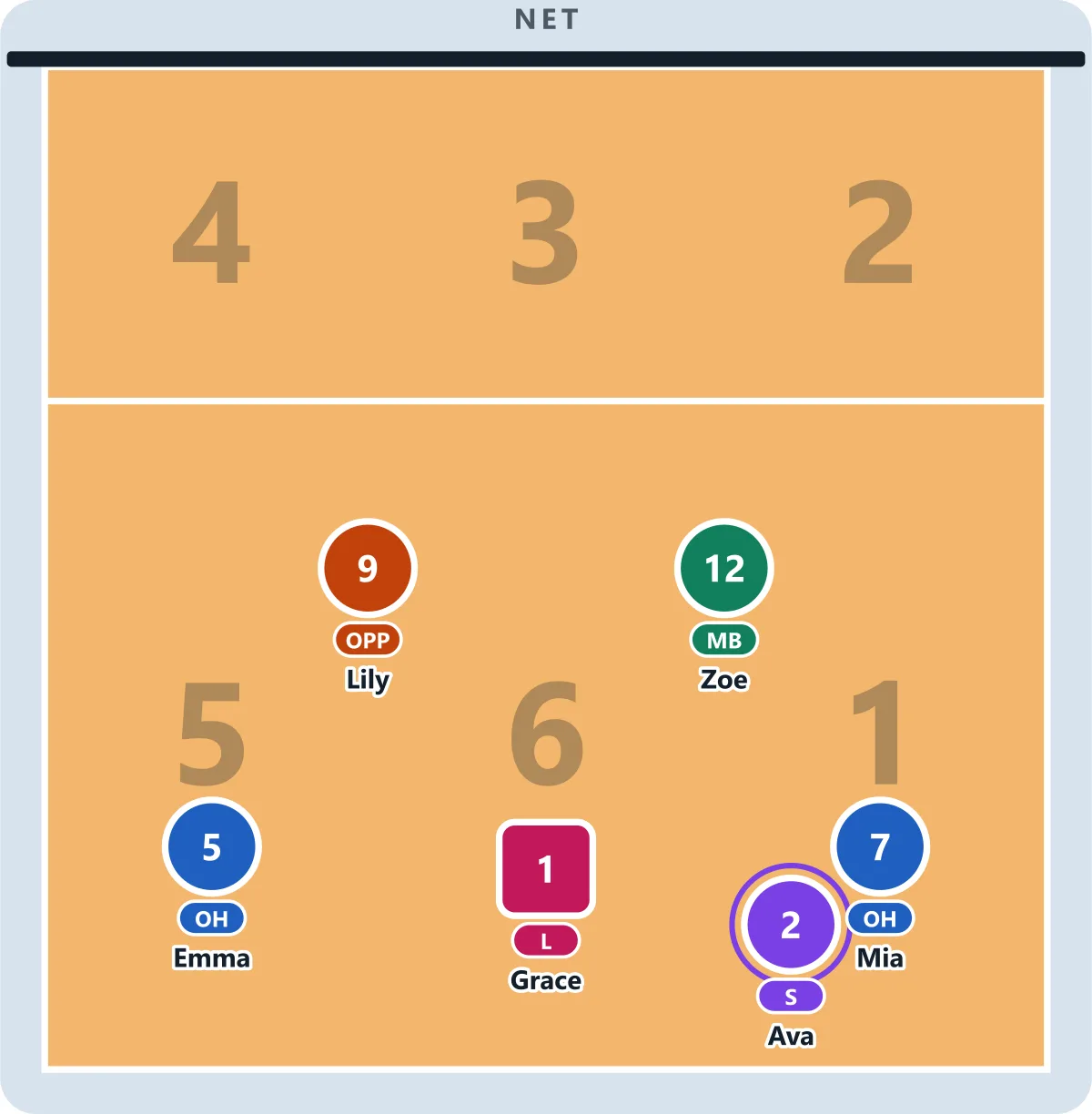
5 passers (the W). For beginners and the 6-6: everyone except the setter passes. Two players stand a few steps behind the 10-foot line and three stand deeper, in the shape of a W.
Stacking and hiding the setter
When the setter is in the back row she has to start behind or beside certain players, and then sprint to the target. Teams “stack” non-passers together near the net so the setter can hide right behind one of them.
The setter’s partners depend on her zone:
- Zone 1: she must be behind the zone 2 player and to the right of the zone 6 player.
- Zone 6: behind the zone 3 player, and between the zone 5 and zone 1 players.
- Zone 5: behind the zone 4 player and to the left of the zone 6 player.
So in Rotation 2 (setter in zone 6), the setter tucks in right behind the middle front at the net: a short run. In Rotation 1 the zone 2 player is usually a passer, so the setter hides deep behind her on the right sideline and has the longest run. Stacks can also hide a weak passer: put her at the net and let your best passers cover the court.
5-1 serve receive rotations, all six
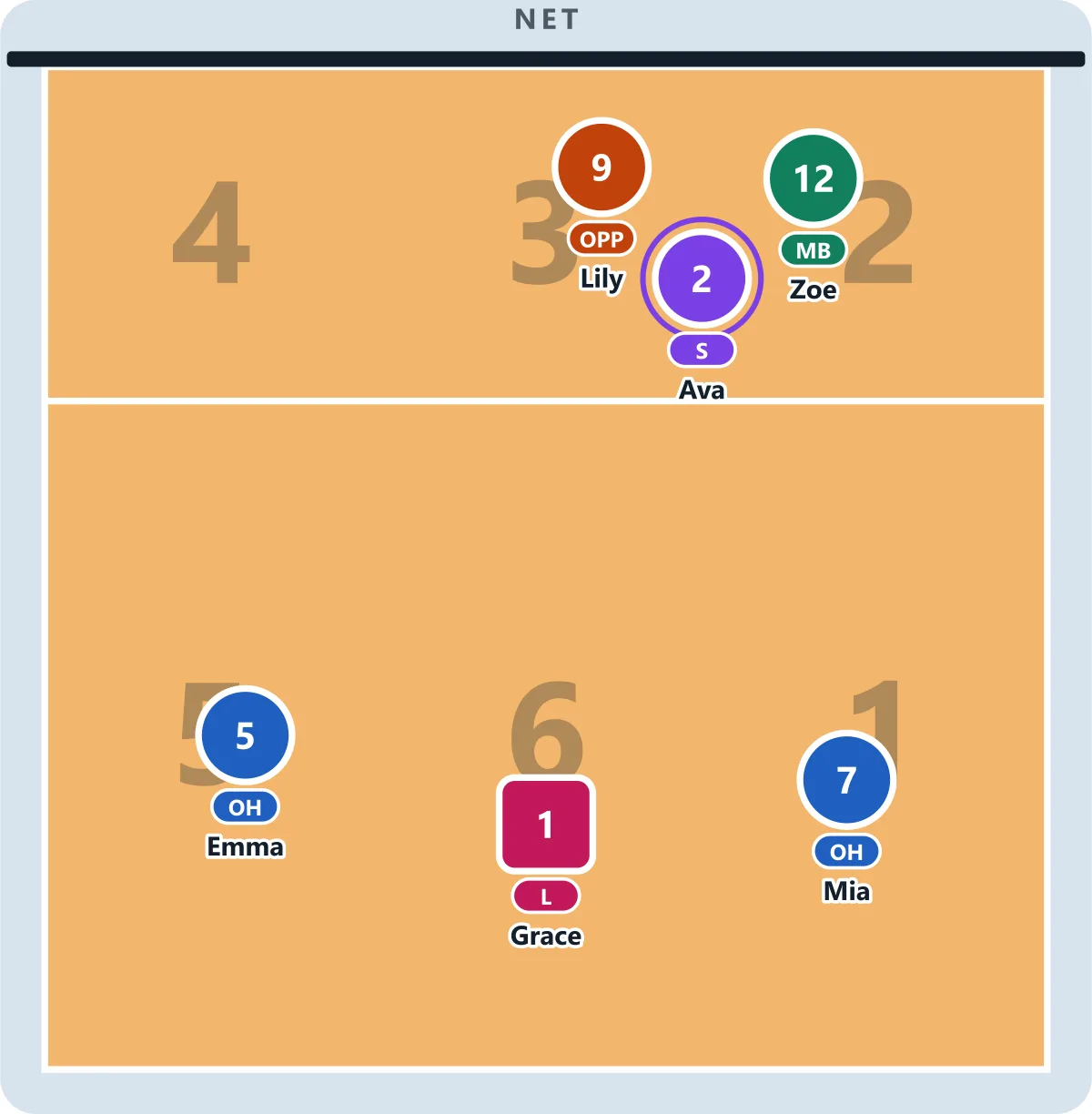
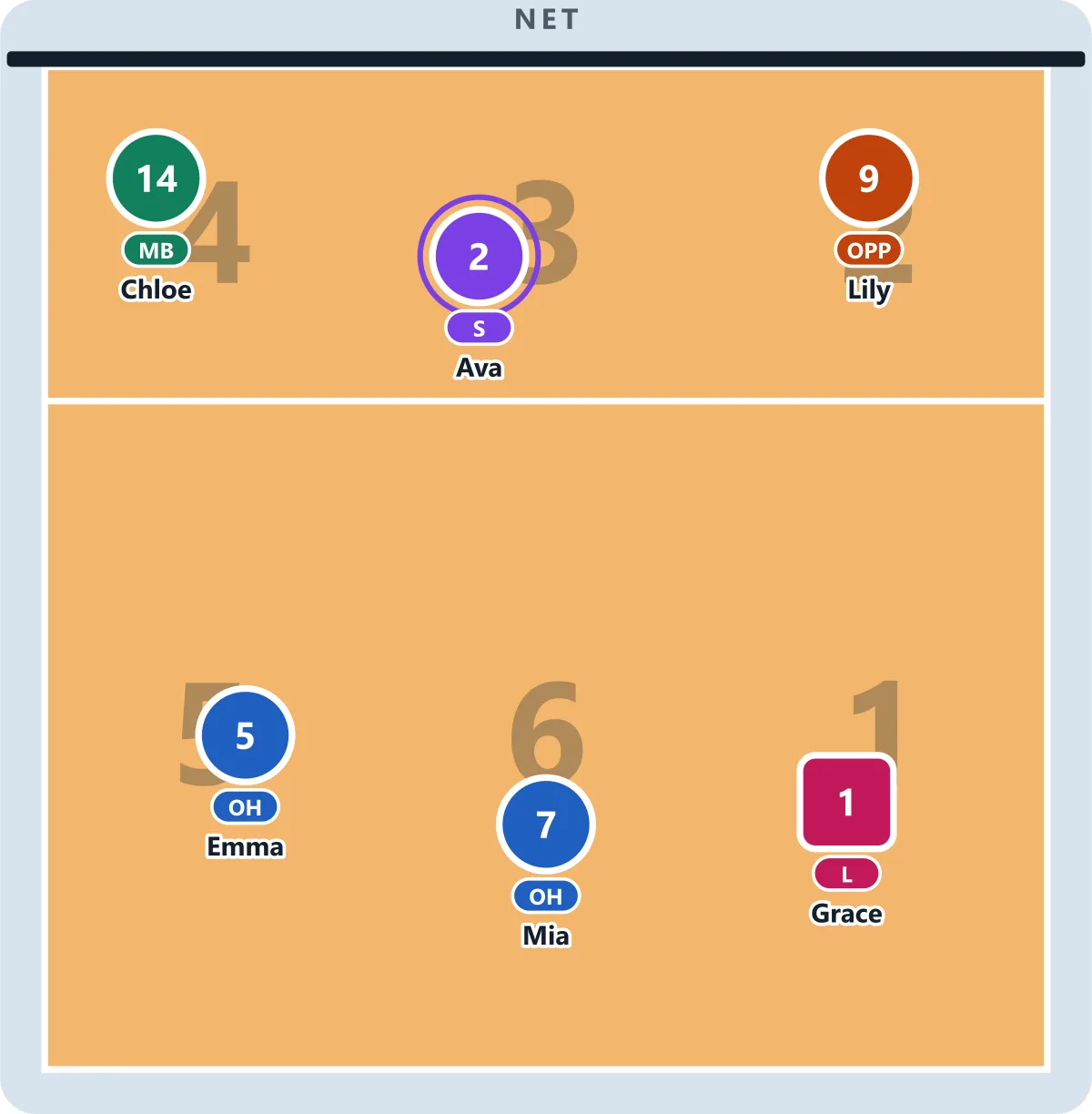
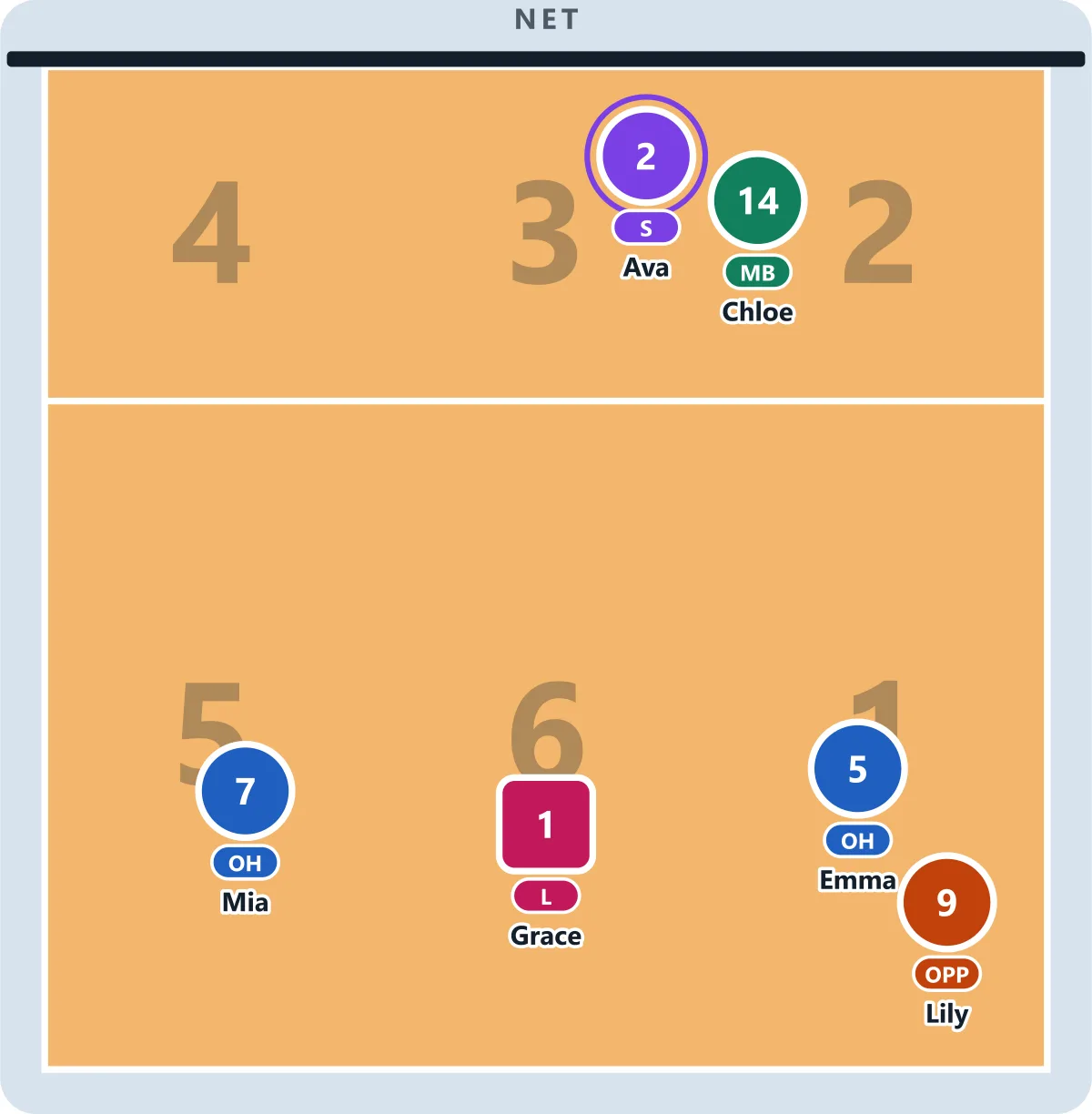
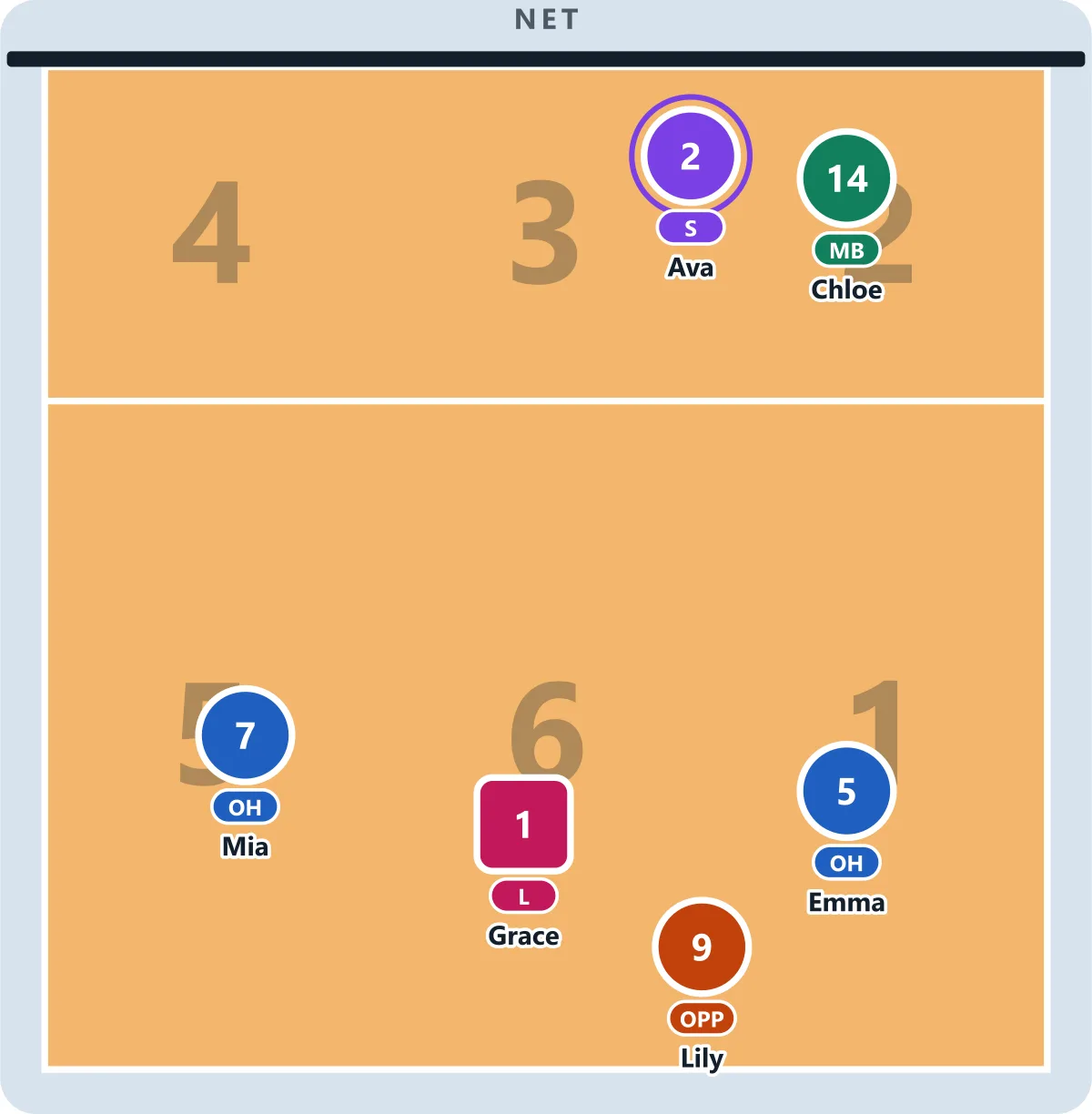
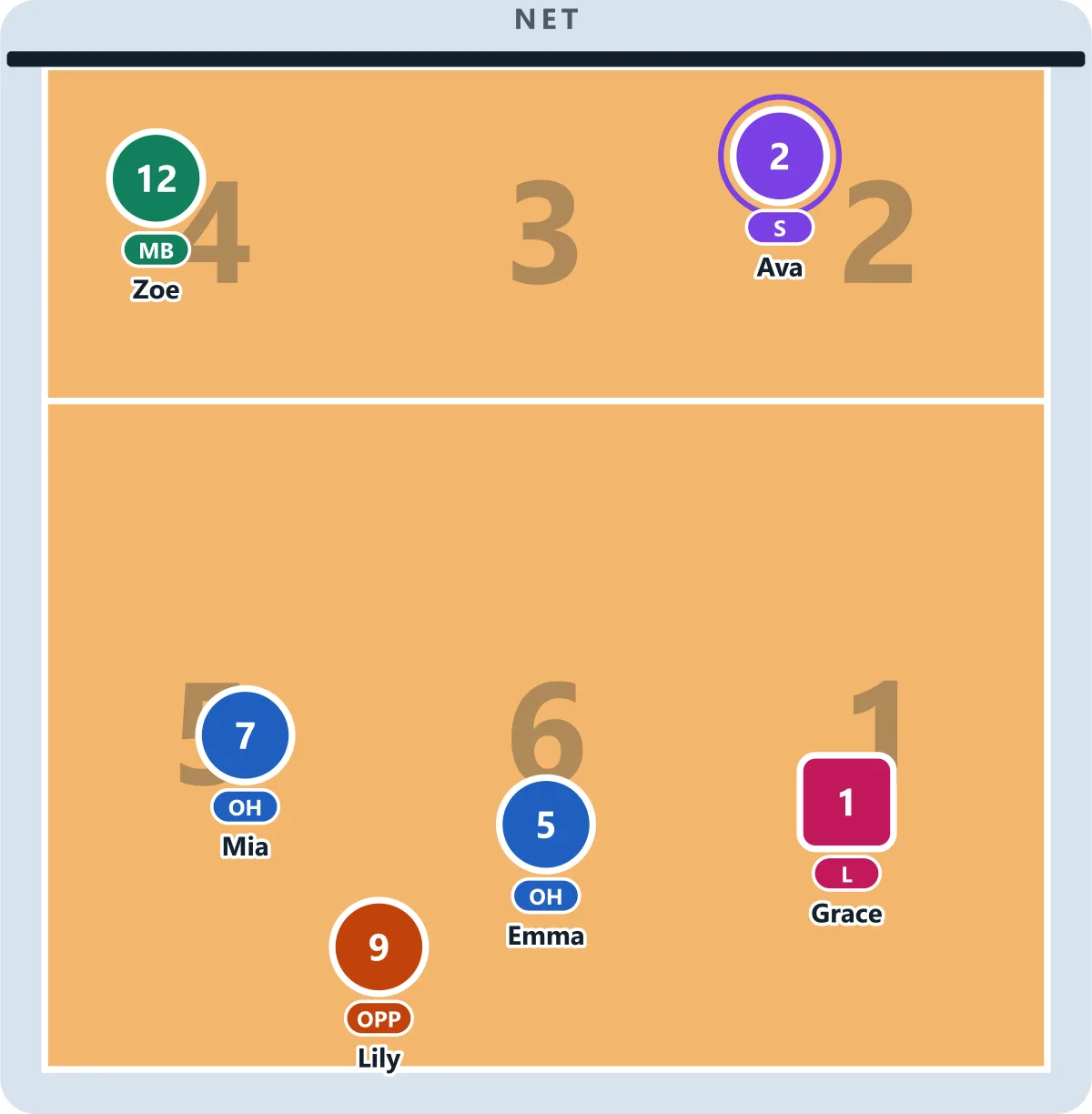
These are the formations the tools build for a 5-1 with 3 passers (libero and both outsides). Rotation 1 = setter in zone 1.
What to watch in each:
- Rotations 1-3 (setter back row): three hitters at the net. The setter’s start spot changes every rotation, so practice each one.
- Rotations 4-6 (setter front row): only two hitters. The opposite is back row and should stay deep and out of the passers’ lanes.
- Every rotation: one outside hitter passes from the front row (from the right lane in Rotations 1 and 4) and still has to get out to her attack approach after the pass.
6-2 and 4-2 summary
6-2. The back-row setter always sets, so the 3-passer patterns look like Rotations 1-3 of the 5-1, and they repeat: Rotation 4 uses the Rotation 1 pattern with the setters swapped, Rotation 5 the Rotation 2 pattern, Rotation 6 the Rotation 3 pattern. You always have three attackers.
4-2. The front-row setter sets, so nobody has to hide. With 4 passers the three back-row players pass, plus one front-row hitter, and there are only three patterns: setter in zone 4, zone 3 and zone 2.
How to choose your passers
Pick passers by passing, not by position. A simple way: grade every player 1 to 3 in practice for two weeks, then:
- Three passers: your libero plus your two best passing outsides. The libero usually takes the middle lane and the most court.
- Four passers: add your next-best passer. In a 5-1 that is often the opposite.
- Keep weak passers at the net. A stack can hide a player who struggles to pass, as long as the formation stays legal.
- Watch the weak rotation. If your weakest passer must pass in a rotation with only two front-row attackers, that rotation will struggle. The generator flags it when you enter passing ratings.
Calling the ball
Most serve receive errors are not bad passes; they are two players going for the same ball or nobody going. Teach one loud call (“Mine!”) and one rule for seams. Passers should call the ball as it crosses the net, not as it arrives. The setter can help: she calls “short” or “deep” when she sees the serve early.
Serve receive back row areas
Think of the back of the court as lanes, not spots:
- Three passers: left lane, middle lane, right lane, each about 3 m wide.
- Seams: the space between two passers. Decide who takes seam balls (many teams give them to the passer moving toward the setter, or to the libero).
- Short serves: front-row passers and the middle passer take short balls; deep passers take deep ones.
- Deep corners: passers start a step deeper against strong jump servers.
The libero usually takes the most court, often the middle lane, because she passes the most balls. See libero rotation for where she plays in each rotation.
Serve receive drills
Short and game-like beats long lines:
- Pass to target, 3 in a row. A coach serves; each passer must pass three 3s in a row to rotate out.
- Seam wars. Serves aimed between passers. Passers call it early; a no-call is a point for the servers.
- Serve receive to side-out. Live serve, pass, set, attack. Passers score only if the team wins the rally.
- Rotation by rotation. Run each of your six formations against ten serves, grading every pass 0-3. Write the average next to each rotation; it shows your weak rotation.
Build your own formations in the builder above or in the volleyball rotation generator, then print them for practice.
Frequently asked questions
What is serve receive in volleyball?
Serve receive is the first contact after the other team serves, and the formation your team uses to make it. Usually two to five players are assigned to pass, and everyone else gets out of their way. A good serve receive pass lets the setter run the offense, which is how teams win points on the other team's serve (side-outs).
When can the setter move on serve receive?
As soon as the server contacts the ball. Overlap is judged at that moment, so until then the setter must stay in order with the players she is compared with. Good setters stand as close to the target as the rules allow, watch the server's hand, and start moving the instant the ball is hit.
What is a good serve receive rating in volleyball?
Many coaches grade each pass 0 to 3: 3 is perfect (the setter has every option), 2 is good, 1 is playable but limited, and 0 is an ace or overpass. A team average around 2.0 is a solid goal for many high school teams, and strong college teams often average higher. Track your own numbers and aim to improve them.
How do you calculate serve receive percentage?
There are two common ways. A pass rating average adds up the 0-3 grades and divides by the number of serves received. A serve receive percentage counts the passes that were good enough to run an offense (often 2s and 3s) and divides by all serves received. Use the same method all season so the numbers compare.
How many passers should be in serve receive?
Three is standard for 5-1 and 6-2 teams with a libero and two good outside passers. Four helps youth and 4-2 teams cover more court. Five, in a W, is the beginner pattern where everyone but the setter passes. Use fewer passers as passing improves, so more hitters can stay ready at the net.
How do you improve serve receive in volleyball?
Give passers more reps against real serves, not tosses. Assign clear lanes so two players never go for the same ball, and set a "seam rule" for balls between passers. Grade every pass in practice, so players get feedback. Short, game-like drills with a score work better than long lines.
What does reception mean in volleyball?
Reception is another word for serve receive: receiving the other team's serve with a pass. Stat sheets often list "reception errors" (serves you could not pass) and "reception attempts". The FIVB and many stat programs use the word reception, while US coaches usually say serve receive or passing.
Rules checked
Rule sets used on this page: NFHS (high school) 2026-27, USAV (club) 2025-27, NCAA (college) 2026 and FIVB (international) 2025-28. Where leagues differ, the tool makes it a setting. Always check your league or state association.
- Overlap: which pairs: USAV 7.4.2-7.4.3; NFHS 6-4-3
- Overlap: server: USAV 7.4; NFHS 6-4-3
- Libero: where: NFHS 10-4-1a
Last reviewed: by EmproIT. See how we check the rules.