Quick answer
In a 6-6, all six players hit and all six take turns setting. The setter is simply whoever rotates into the setting spot, usually zone 3 (middle front). The other five players pass in a "W". There is only one formation to learn, so it is the easiest rotation for beginners and young kids.
Volleyball rotations for beginners: why the 6-6
Beginners have a lot to think about: where to stand, when to rotate, who serves and who sets. The 6-6 keeps it simple:
- One formation. All six rotations use the same W pattern.
- One rule for setting. Whoever is in the setting spot sets.
- Everyone learns every skill. No one is stuck in one position before she knows what she likes.
It is the right system for first-year players, 8U to 12U rec teams, and school PE classes. The volleyball rotations explained guide covers the basics of zones and side-outs if you are new to it too.
One spot, everyone sets
In a 6-6, the setter is not a person. It is a spot. Most coaches use zone 3, the middle front. When a player rotates into zone 3, she is the setter for that rotation. The other five players pass in a “W”: two players a few steps behind the 10-foot line and three deeper.
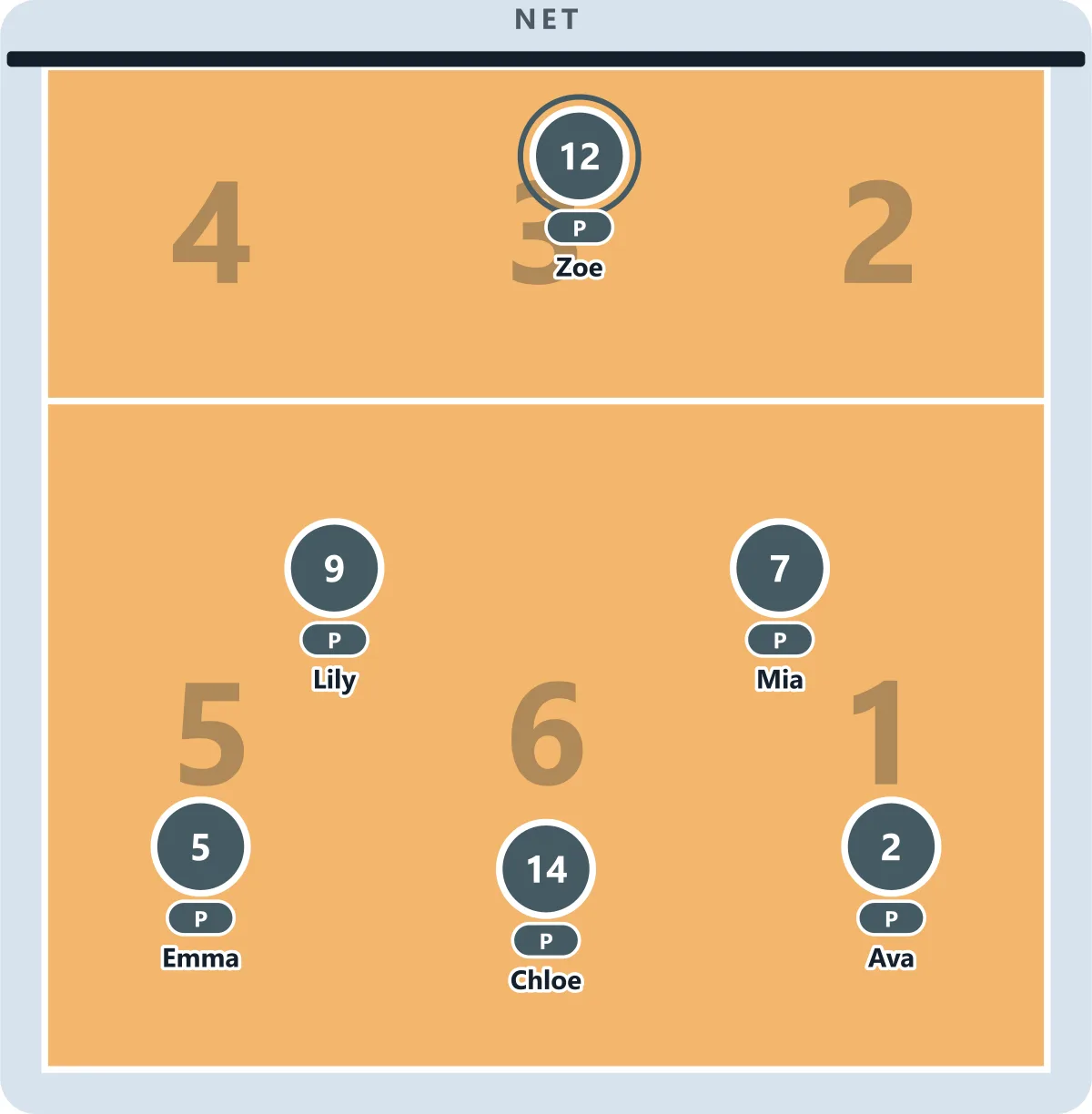
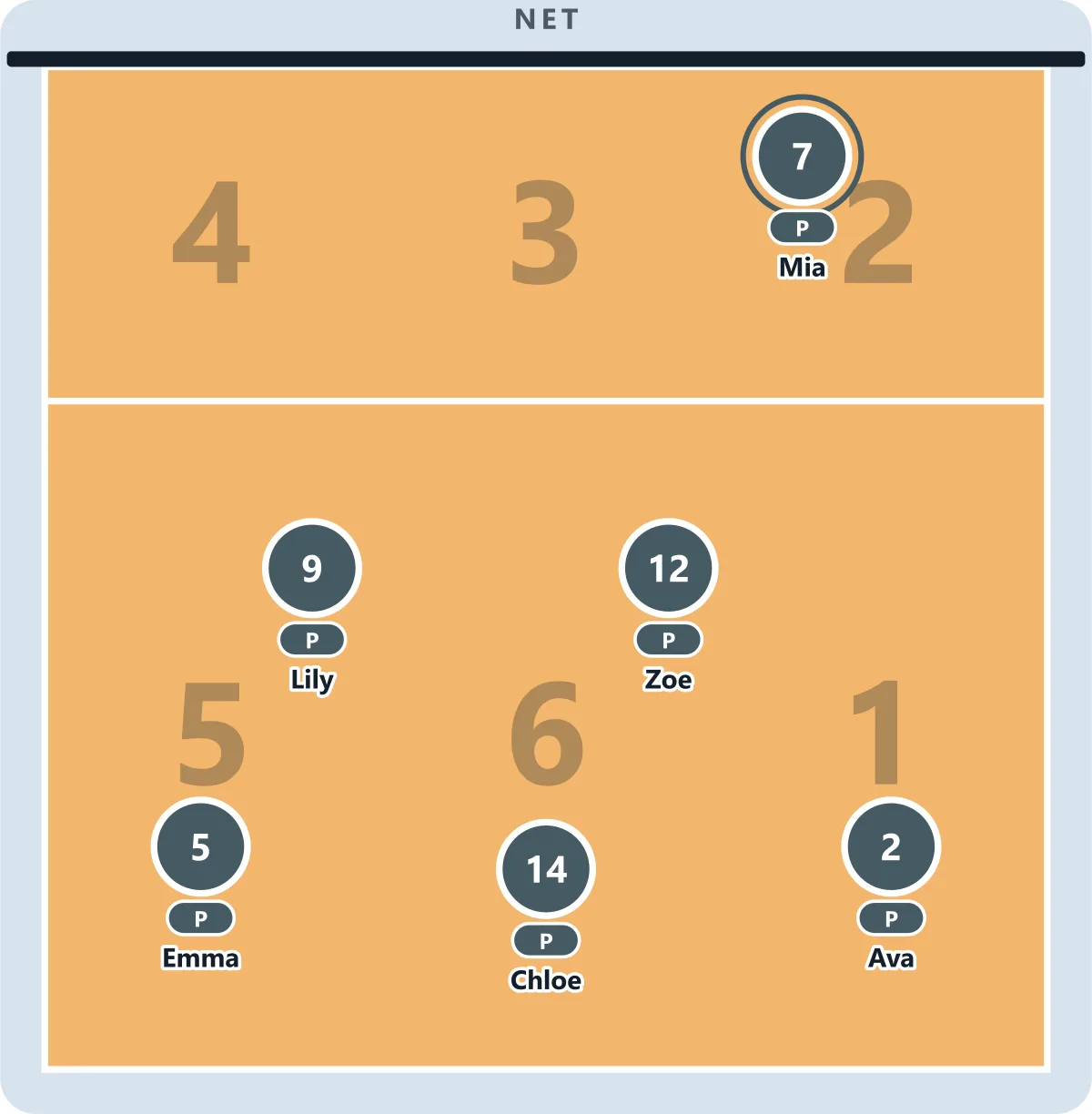
At the serve, the front-row passers must still be in front of their back-row partners and in the right order left to right. The W above does that in every rotation. You can try it in the tool: drag a player and the overlap check turns red.
How to teach kids to rotate
Coaches told us the same thing again and again: kids need many reps to find their spot, and color and repetition help most. A plan that works:
- Tape the zones. Put a big number on the floor in each zone.
- Say it out loud. In each rotation, every player calls her zone: “I’m in 4!”
- Walk, then jog, then play. Walk the rotation six times, jog it six times, then play a free ball in each rotation.
- Ask “Who sets?” before every serve. The team points to the zone 3 player.
- Use teaching mode. Put the court on a TV or tablet with the “Where do I stand?” quiz: the court shows a rotation and the player taps her spot.
The volleyball positions page has a tap-a-zone court that helps kids learn the zone numbers.
Serve limits
Many youth and rec leagues limit how many serves in a row one player can hit, often 3 or 5. After the limit, the league decides what happens: the team rotates and the next player serves, or the serve goes to the other team. These are league rules, not NFHS or USA Volleyball rules, so check your league. The volleyball scoreboard supports both options and tracks it for you.
USA Volleyball’s youth rules also allow a smaller court and lower nets for young age groups, and one toss re-serve for 14U and under. Your league will tell you which apply.
Equal playing time
Most youth programs promise every child fair playing time. Doing that on the bench is hard, so plan it:
- Split each set into chunks (for example, sub at 8 and 16 points).
- Rotate bench players in by the plan, not by mood.
- Some rec leagues use sub through rotation: a bench player enters at a fixed spot on every rotation. The scoreboard can run that too.
The playing-time balancer below the tool builds the plan for 7 to 14 players and prints it.
Common beginner mistakes
- Rotating after every point. Teams rotate only when they win the serve back from the other team. Winning a point on your own serve means the same player serves again.
- Rotating the wrong way. It is always clockwise: the right-front player moves back to serve. A quick check: “Who serves next?” The answer is always the player in zone 2.
- Everyone runs to the ball. In the W, each passer owns a lane. Teach “mine” and “yours” calls from day one.
- The setter passes the first ball. The zone 3 player stays at the net and waits for the pass, unless the ball comes right at her.
Practice games for rotations
- Rotation relay. Two teams, each player wears a pinny number. Coach calls “Side-out!” and both teams rotate. First team in the right spots wins a point.
- Freeze. Play a free-ball rally. Coach yells “Freeze!” and players say their zone. Wrong zone = one push-up for the whole team, done together.
- Serve and rotate. Each serve that goes in earns a rotation. First team back to its starting lineup wins.
- Who sets? Coach tosses to the team. Only the zone 3 player may set; anyone else touching the second ball gives a point away.
When your team is ready for more, move to the 4-2 rotation, where only two players set. Build your own team in the volleyball rotation generator or print the 6-6 rotation sheet.
Frequently asked questions
What is the easiest volleyball rotation?
The 6-6. Every player hits, every player sets when she rotates into the setting spot (usually zone 3), and the other five pass in a W. There is one formation for all six rotations, so beginners only have to remember where the setting spot is and to rotate clockwise when their team wins the serve back.
How do you rotate in volleyball for beginners?
Rotate one spot clockwise each time your team wins the rally while the other team was serving (a side-out). The player in zone 2 (right front) moves to zone 1 and serves. Everyone else follows: 1 to 6, 6 to 5, 5 to 4, 4 to 3 and 3 to 2. You do not rotate when you win a point on your own serve.
How do you teach volleyball rotations to beginners?
Use repetition and a few simple words. Number the zones on the floor with tape, walk the rotation slowly six times, and have each player say her zone out loud. Then play short games where the team must rotate correctly to earn a point. Kids learn faster by moving than by looking at a diagram.
How do you rotate in youth volleyball?
The same way as at every level: clockwise, one spot, only after a side-out. Many youth leagues add their own rules, such as a serve limit (for example 3 or 5 serves in a row) or a bench player who enters at a fixed spot every rotation. Check your league rules before the first match.
Who sets in a 6-6?
Whoever is standing in the setting spot when the ball is served. Most coaches use zone 3, the middle of the front row, so the setter can set either outside hitter. Some use zone 2 (right front), which matches the target in older systems. Pick one and keep it the same all season.
What age should kids stop playing 6-6?
There is no set age. Move up when most players can pass to the middle of the court and two or three players can set a hittable ball. Many teams switch to a 4-2 around 11 to 13 years old. Keep giving every player setting reps in practice even after you change systems.
How do you make playing time fair in youth volleyball?
Plan it before the match. Split each set into chunks and sub at set scores, so every player gets about the same number of points on the court. The playing-time balancer on this page builds a plan for 7 to 14 players and prints it, so you are not doing math on the bench.
Rules checked
Rule sets used on this page: NFHS (high school) 2026-27, USAV (club) 2025-27, NCAA (college) 2026 and FIVB (international) 2025-28. Where leagues differ, the tool makes it a setting. Always check your league or state association.
- Youth: court and net (USAV): USAV 1.1, 12.4.4
- Overlap: which pairs: USAV 7.4.2-7.4.3; NFHS 6-4-3
- Youth: sub through rotation: Rogers AR rules
Last reviewed: by EmproIT. See how we check the rules.